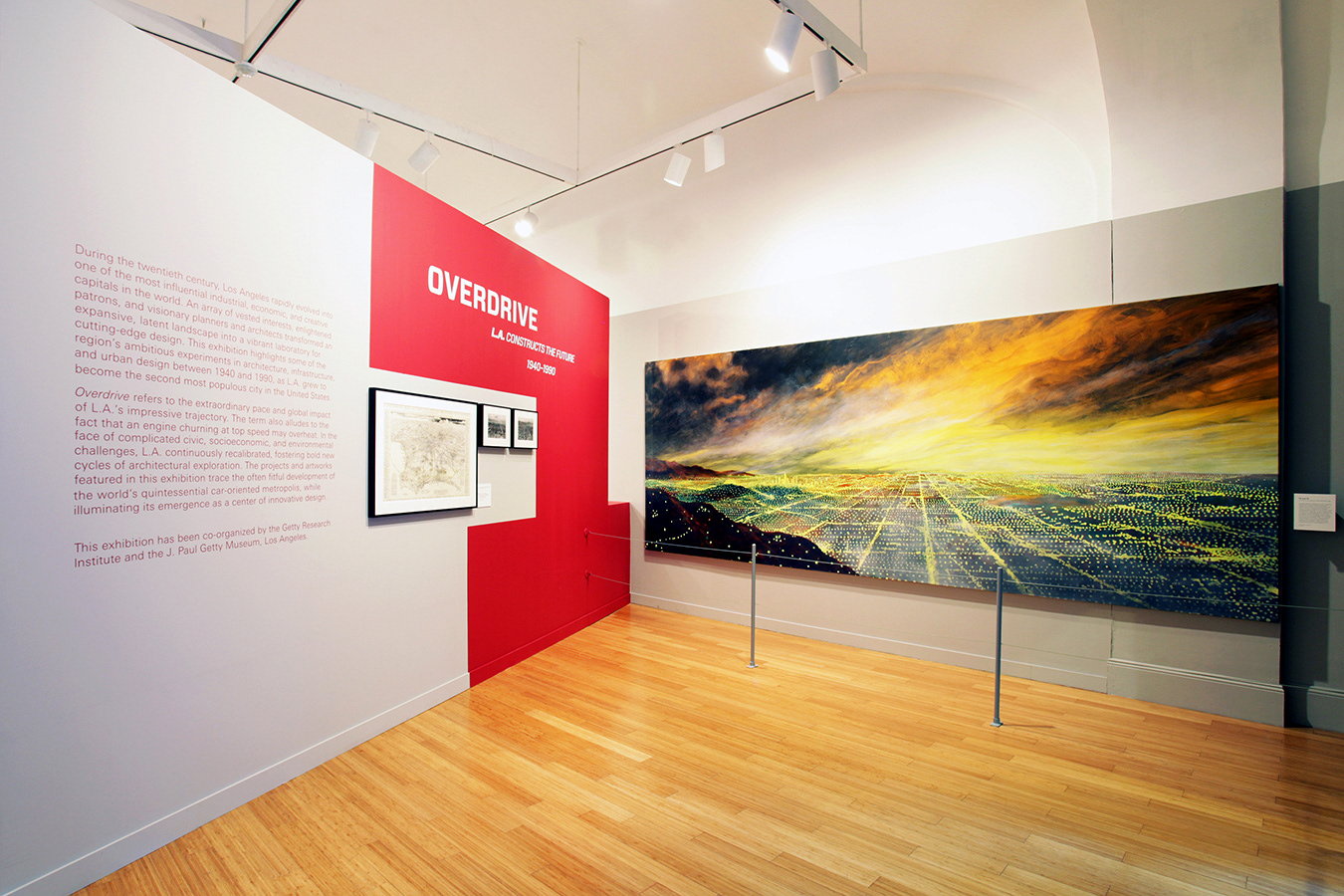
Overdrive: L.A. Constructs the Future, 1940–1990
October 20, 2013–March 10, 2014
October 20, 2013–March 10, 2014
In the mid-20th century, Los Angeles’s rapid growth transformed the city into a global hub of industry and creativity. Overdrive examined how architecture both fueled and reflected this change, while cautioning against the risks of unchecked development.
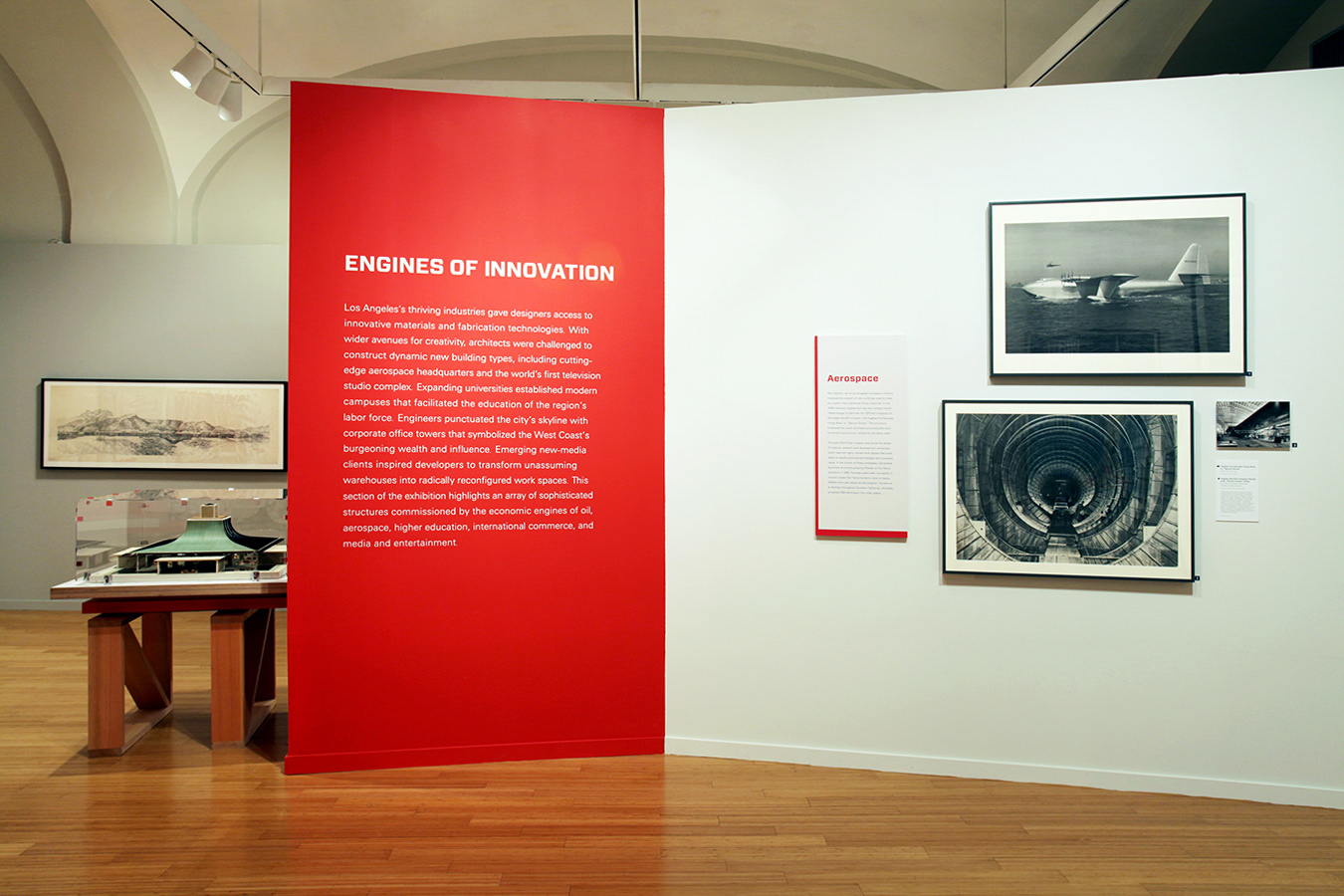
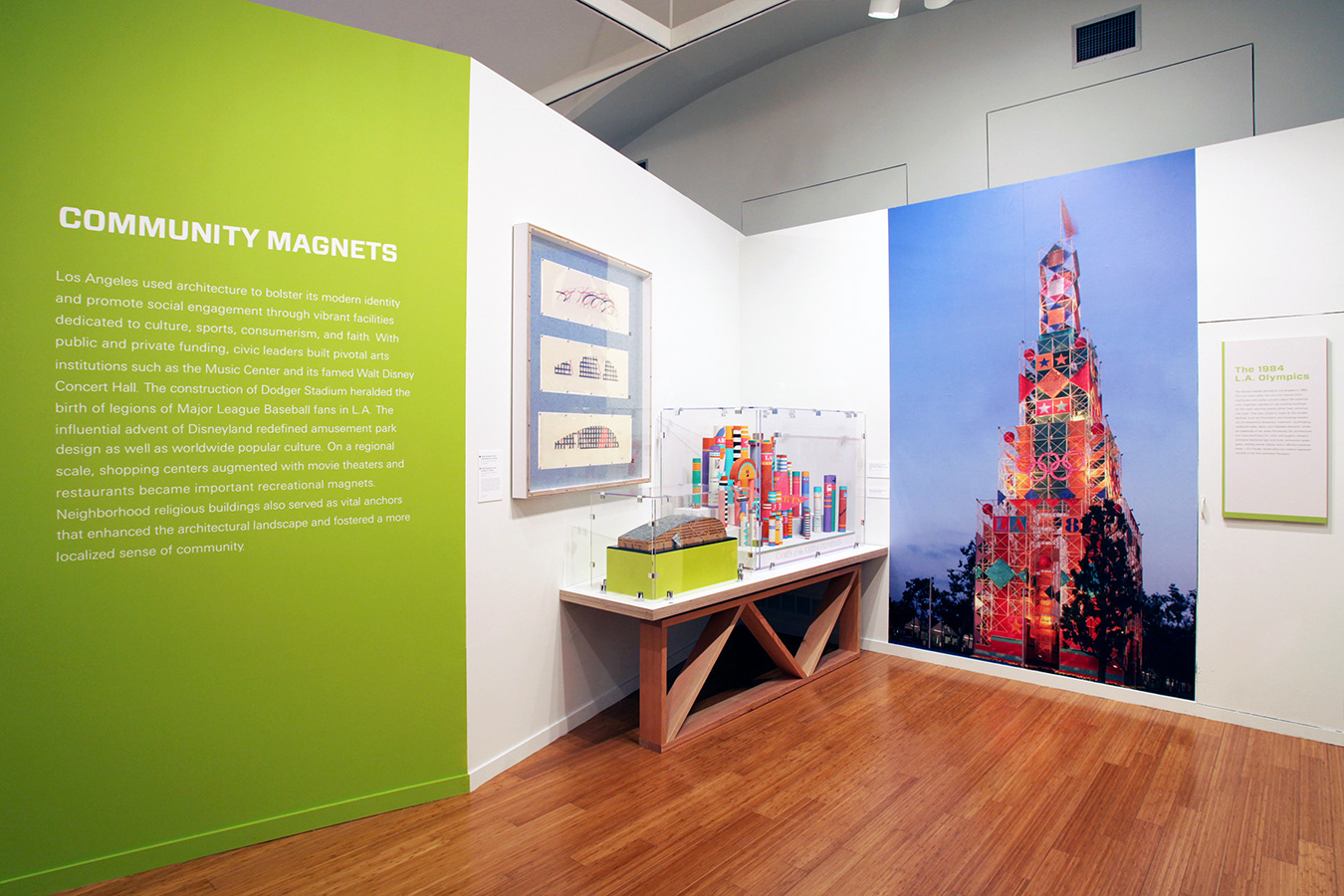
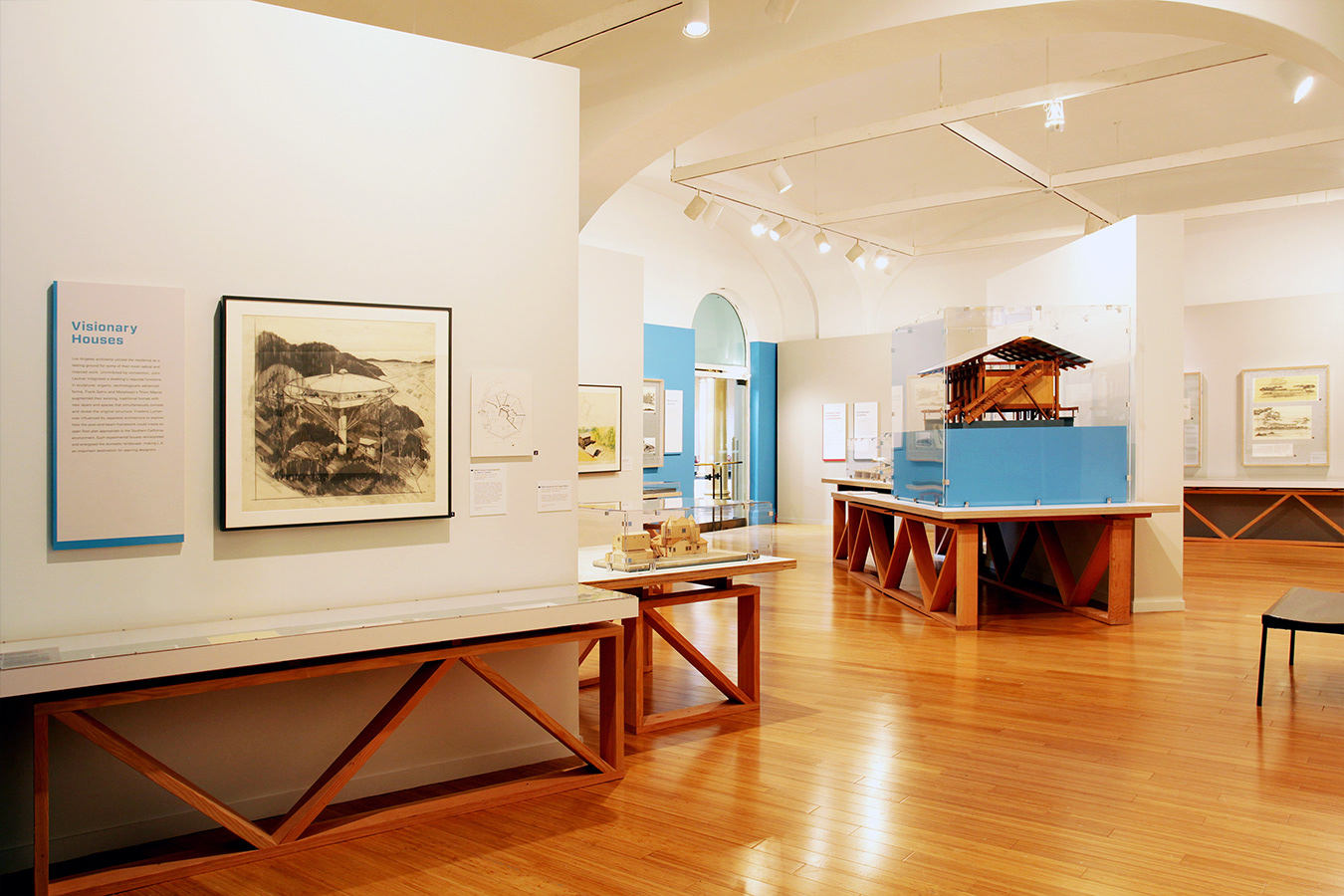
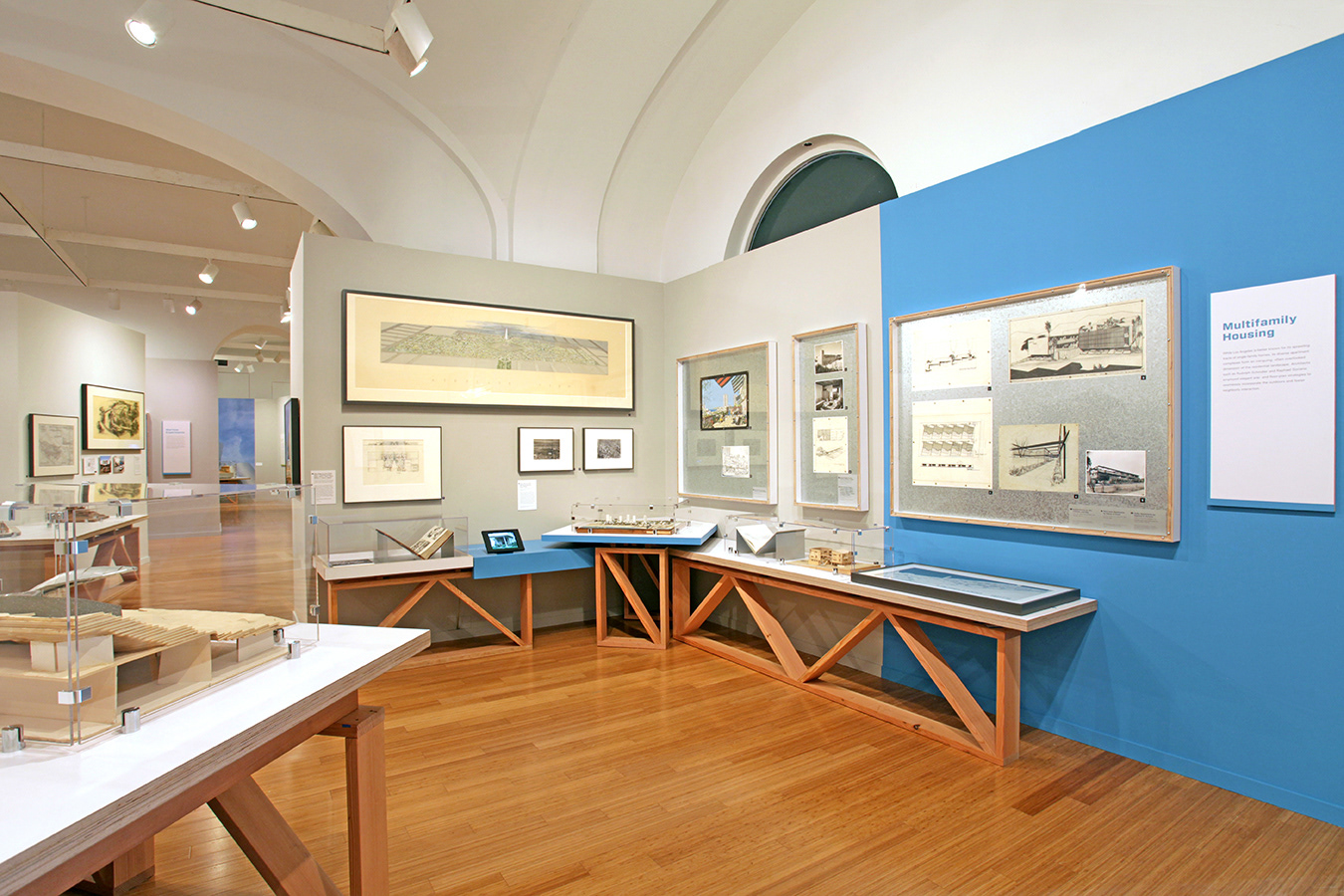
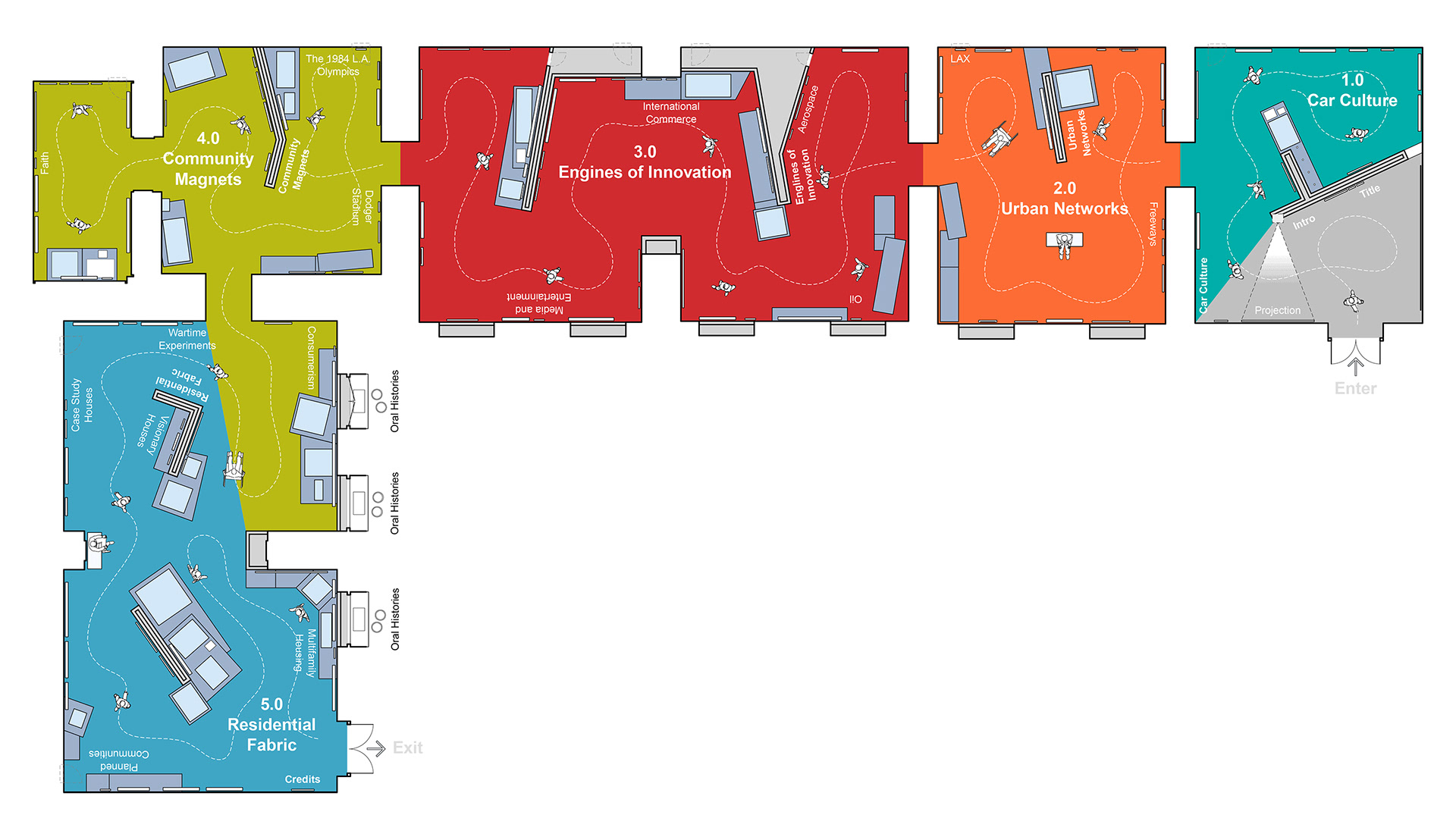
Divided into five sections—Car Culture, Urban Networks, Engines of Innovation, Community Magnets, and Residential Fabric—the exhibition presented drawings, photographs, and models revealing how patrons, infrastructure, and emerging technologies continuously reshaped the urban landscape.
Objective
—
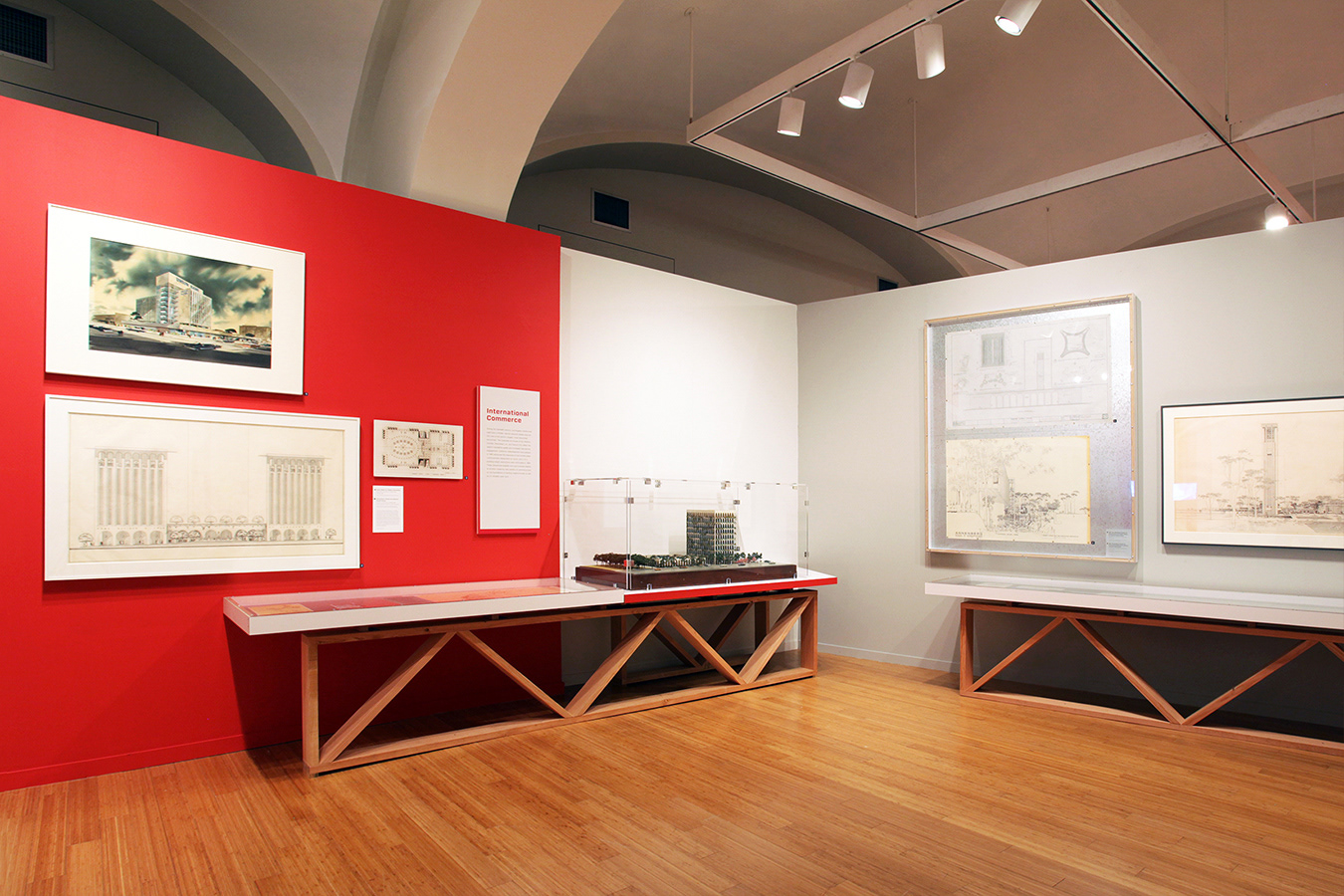
Reimagine five thematic sections across eight galleries while preserving narrative flow and intuitive movement. Integrate forty-six magnetic shadowboxes, eighteen table cases, and five iPad interactives into a layout that felt purposeful rather than condensed.
—
Reimagine five thematic sections across eight galleries while preserving narrative flow and intuitive movement. Integrate forty-six magnetic shadowboxes, eighteen table cases, and five iPad interactives into a layout that felt purposeful rather than condensed.
Challenge
—
Originally presented at the Getty Center’s 6,600-square-foot Exhibitions Pavilion, the exhibition was adapted for the National Building Museum, a historic venue offering approximately 5,500 square feet for this show. The reduced footprint required thoughtful spatial compression without sacrificing clarity, pacing, or visual impact.
—
Originally presented at the Getty Center’s 6,600-square-foot Exhibitions Pavilion, the exhibition was adapted for the National Building Museum, a historic venue offering approximately 5,500 square feet for this show. The reduced footprint required thoughtful spatial compression without sacrificing clarity, pacing, or visual impact.
Approach
—
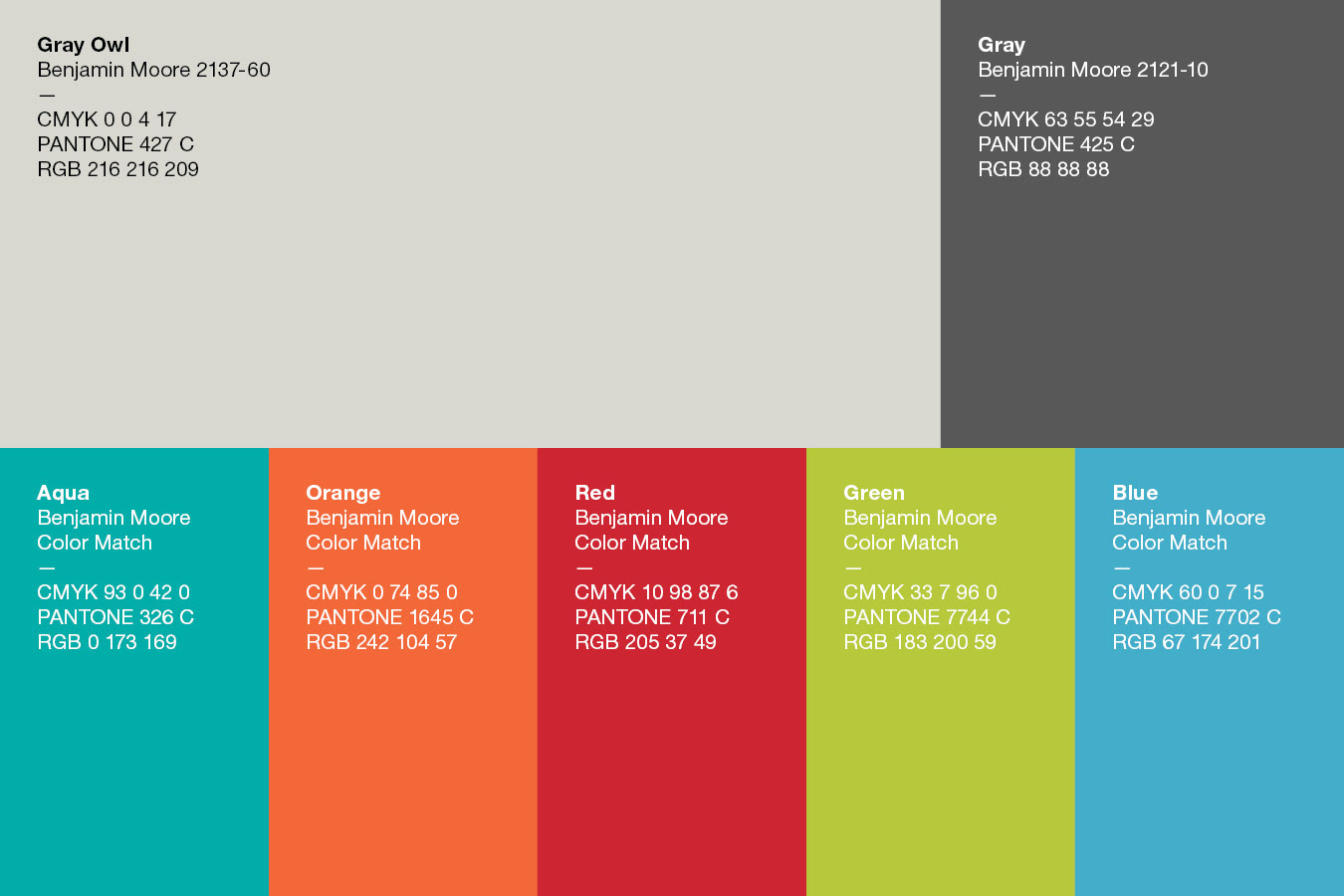
Content and cases were strategically redistributed to preserve sectional hierarchy and visual rhythm. Angled walls expanded hanging capacity while shaping sightlines and guiding movement from gallery to gallery. The vibrant palette remained as intentional accents, sustaining the curatorial mood while clearly distinguishing each section.
—
Content and cases were strategically redistributed to preserve sectional hierarchy and visual rhythm. Angled walls expanded hanging capacity while shaping sightlines and guiding movement from gallery to gallery. The vibrant palette remained as intentional accents, sustaining the curatorial mood while clearly distinguishing each section.
Story Plan
Outcome
—
Visitors moved through a cohesive journey that reflected Los Angeles’s restless creativity. Drawings, photographs, and models invited close looking and comparison across sections. Many left with a renewed appreciation for the city’s bold architectural ambition—and a clearer sense of how design continues to shape urban life.
—
Visitors moved through a cohesive journey that reflected Los Angeles’s restless creativity. Drawings, photographs, and models invited close looking and comparison across sections. Many left with a renewed appreciation for the city’s bold architectural ambition—and a clearer sense of how design continues to shape urban life.
Project Details
—
Venue: National Building Museum
Size: 5,542 SF
Content: Objects (335), Videos (14), Murals (8)
—
Role: Installation Design
—
Co-organizers: Getty Research Institute and J. Paul Getty Museum
Co-curators: Wim de Wit and Christopher James Alexander
Coordinating curator: G. Martin Moeller, Jr.
Coordinating graphic designer: Vlad Zabavskiy
Photos © Allan Sprecher
—
Venue: National Building Museum
Size: 5,542 SF
Content: Objects (335), Videos (14), Murals (8)
—
Role: Installation Design
—
Co-organizers: Getty Research Institute and J. Paul Getty Museum
Co-curators: Wim de Wit and Christopher James Alexander
Coordinating curator: G. Martin Moeller, Jr.
Coordinating graphic designer: Vlad Zabavskiy
Photos © Allan Sprecher